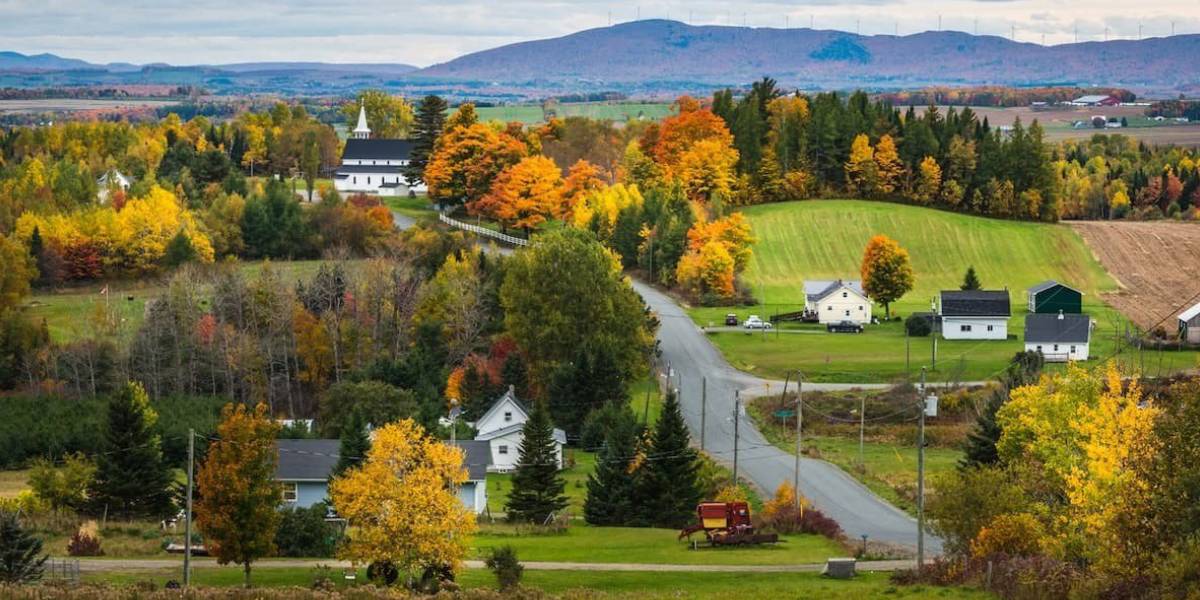

Canada’s Rural Community Immigration Pilot (RCIP) has officially entered its second year, and major updates are now live for 2026. Nine participating communities have released their new occupation lists, intake dates, and employer rules under this growing Canada rural permanent residency pathway.
If you are looking for Canada permanent residency outside major cities, this update could change your plans completely.
Unlike Express Entry or most Provincial Nominee Programs that focus heavily on urban areas, the Rural Community Immigration Pilot (RCIP) is designed to support smaller communities facing labour shortages. The goal is simple: bring skilled workers directly into rural Canada and offer them a clear Canada permanent residency route.
This new Canada rural permanent residency pathway continues to gain momentum in 2026.
Check your eligibility instantly with our Canada PR Points Calculator—fast, accurate CRS score estimate for Express Entry success.
What Is the Rural Community Immigration Pilot (RCIP)?
The Rural Community Immigration Pilot (RCIP) is a federal immigration program that connects foreign workers to designated rural employers.
It offers:
- A direct pathway to Canada permanent residency
- Community-driven employer support
- Local settlement integration
- Priority occupation targeting
- Faster processing compared to some other programs
The Canada rural permanent residency pathway requires candidates to secure a job offer from a designated employer in a participating rural community.
9 RCIP Communities at a Glance – 2026 Overview
| Community | Province | Key Feature |
|---|---|---|
| Pictou County | Nova Scotia | Tech & Manufacturing focus |
| North Bay | Ontario | Added Science sector |
| Thunder Bay | Ontario | Occupation limits |
| Sault Ste. Marie | Ontario | Employer caps |
| Timmins Region | Ontario | Dual RCIP & FCIP programs |
| Greater Sudbury | Ontario | 100+ designated employers |
| Brandon | Manitoba | 15% Health sector reserve |
| North Okanagan-Shuswap | British Columbia | Points-based system |
| Claresholm | Alberta | 30 total allocations |
Each community operates under the broader Rural Community Immigration Pilot (RCIP) but sets its own occupation priorities.
Apply for Canada PR from India with expert guidance—fast processing, high success rate, and complete support for your dream move.
Key 2026 Trends in the Canadian Rural Permanent Residency Pathway
Several important patterns are emerging this year:
1. Healthcare Remains a Priority
Registered nurses, licensed practical nurses, and support workers are in demand across nearly all RCIP communities.
2. Skilled Trades Are Expanding
Construction millwrights, welders, truck drivers, and automotive technicians are heavily targeted.
3. Points-Based Systems Introduced
Communities like Thunder Bay and North Okanagan-Shuswap now use ranking systems similar to Express Entry.
4. Employer Caps Implemented
Some communities now limit:
- Applications per employer
- Total recommendations
- Sector allocations
5. Sector Restrictions Tightened
Certain communities no longer accept:
- Gas stations
- Fast food restaurants
- Convenience stores
This shift shows that the Canada rural permanent residency pathway is focusing on long-term retention and economic impact.
Check the latest Canada PR processing time, factors affecting approval, and tips to speed up your application for faster results.
Sample Priority Occupations Across Communities
Below is a combined snapshot of high-demand roles under the 2026 Rural Community Immigration Pilot (RCIP):
| NOC Code | Occupation |
|---|---|
| 31301 | Registered Nurses |
| 32101 | Licensed Practical Nurses |
| 33102 | Nurse Aides |
| 42202 | Early Childhood Educators |
| 21232 | Software Developers |
| 21300 | Civil Engineers |
| 72106 | Welders |
| 72400 | Construction Millwrights |
| 72410 | Automotive Service Technicians |
| 73300 | Transport Truck Drivers |
| 75110 | Construction Trades Helpers |
| 21330 | Mining Engineers |
These occupations form the backbone of the Canada rural permanent residency pathway for 2026.
Common Eligibility Requirements for RCIP
To qualify under the Rural Community Immigration Pilot (RCIP), candidates must:
For Applicants:
- Have a valid full-time, permanent job offer
- Have at least 1 year (1,560 hours) of related work experience in the last 3 years
- Meet language requirements (CLB based on TEER level)
- Have a Canadian education or an ECA
- Show intent to live in the community
- Show settlement funds if required
For Employers:
- Operate for at least 2 years in the community
- Be in a priority sector
- Complete IRCC training
- Support settlement efforts
- Comply with employment laws
This structured model ensures the Canada rural permanent residency pathway benefits both employers and newcomers.
Check your Express Entry score instantly with our Canada CRS Calculator—fast, accurate results to plan your PR journey smarter.
How RCIP Differs from Express Entry
| Feature | RCIP | Express Entry |
|---|---|---|
| Focus | Rural communities | National |
| Requires a job offer | Yes | Not always |
| CRS Score | Not used federally | Required |
| Community support | Mandatory | Not required |
| Employer designation | Required | Not required |
The Rural Community Immigration Pilot (RCIP) is more community-driven and employer-focused compared to Express Entry.
Step-by-Step: How to Apply Under RCIP
If you want to use this Canada rural permanent residency pathway, follow these steps:
- Research participating communities
- Review their occupation lists
- Confirm eligibility requirements
- Apply to designated employers
- Secure a permanent job offer
- Work with the employer during the intake period
- Submit community recommendation
- Apply for Canada permanent residency
Why Rural Canada Is Becoming More Attractive
The 2026 expansion of the Rural Community Immigration Pilot (RCIP) reflects Canada’s strategy to:
- Address labour shortages
- Reduce pressure on big cities
- Encourage regional growth
- Support smaller economies
With multiple communities actively recruiting, the Canadian rural permanent residency pathway may now be easier for skilled workers than traditional streams.
Important Differences Between Communities
Each RCIP location has unique rules:
- Brandon reserves 15% of allocations for healthcare.
- Claresholm issues only 30 total allocations per year.
- Timmins operates both the RCIP and the Francophone Community Immigration Pilot (FCIP).
- Thunder Bay uses a points-based ranking with minimum thresholds.
Understanding these differences is critical before choosing your Canada permanent residency strategy.
Frеquеntly Askеd Quеstions (FAQs)
No. You can only have one active application at a time under the Rural Community Immigration Pilot (RCIP).
It is optional. The program does not require representation.
Each community has limited spots. Once full, intake pauses until the next cycle.
Recommendations are tied to your specific job offer. Changing employers may affect your eligibility.
Conclusion: 2026 Is a Big Year for the Canada Rural Permanent Residency Pathway
The Rural Community Immigration Pilot (RCIP) is no longer small — it is now a powerful and growing Canada rural permanent residency pathway.
With nine communities publishing detailed occupation lists and structured intake periods, skilled workers have real, practical opportunities to achieve Canada permanent residency outside major cities.
Healthcare workers, trades professionals, engineers, educators, and IT specialists are especially well-positioned in 2026.
If your occupation aligns with a participating community, the Rural Community Immigration Pilot (RCIP) may be your fastest path to Canada permanent residency this year.
How Visa Solutions 4u Can Help
Visa Solutions 4u provides complete support for candidates applying under the Canada rural permanent residency pathway.
Services include:
- RCIP eligibility assessment
- Occupation matching and NOC verification
- Community selection guidance
- Employer coordination support
- Documentation preparation
- Permanent residency application assistance
If you are considering the Rural Community Immigration Pilot (RCIP), professional guidance can help you choose the right community and avoid costly mistakes.
Rural Canada is opening its doors — and 2026 may be your opportunity to secure Canada permanent residency in Canada through this expanding pathway.